IOL MASTER :
A new dimension in optical biometry to improve postoperative refractive results.

Advantages
• Precise Measuring: exact measurement of the eye is possible even in cases of high ametropia, pupil size
as well as state of accommodation.
• Non contact Technique: no requirement of local anesthesia, no risk of infection from patient to patient.
• Saves time: axial length, corneal curvature and anterior chamber depth of the patient's eye are measured
on the same instrument saving valuable time.
PAM :
Gives an estimate of potential vision following cataract surgery. The
Potential Acuity Meter (PAM) is a device that is designed to project an
eye chart directly onto the retina, in essence bypassing the cloudy
lens. For patients with retinal disease, such as age related macular
degeneration, the PAM may improve the reliability of anticipated vision
following cataract surgery.
SUPER PINHOLE DEVICE
The Super Pinhole device works on a different principle, but may deliver
the same result. The patient views a specialized eye chart through a
pinhole in an attempt to discover a clearer region in the cataract. Both
of these potential acuity measurements may overestimate or
underestimate the vision achieved after cataract surgery.
TREATMENTS :
Cataracts can be removed at any age. You no longer have to wait until
the cataract "ripens" or until you lose your sight before surgery can be
performed. In fact the placement of an intraocular lens (IOL) implant
to restore vision is best done in when the cataract starts interfering
with your daily activities or causes a decrease in vision.
The clouded lens (cataract) must be removed surgically. Common type of
Extra Capsular Cataract Extraction is called Phacoemulsification (often
just called "phaco") which the general public understands as Laser
cataract surgery.
ABOUT PHACOEMULSIFICATION
Dr. Charles Kelmen conceived and developed phacoemulsification, a method
of cataract removal by ultrasonic fragmentation and aspiration of the
cataractous lens through a small wound. Phacoemulsification is
advantageous for both patients and surgeon.
• Greater intra operative control.
• A smaller wound with no sutures possesses less risk of infection and induced astigmatism and gives better long and short term
predictability of vision.
• Patients are able to resume normal activity much sooner and with fewer restrictions than the traditional cataract surgery.
Phacoemulsification with sophisticated instrumentation provides options of pulse and burst mode.
TYPES OF INTRAOCULAR LENS
1. Monofocal lens :
 These lenses are the most commonly implanted lenses today. They have
equal power in all regions of the lens and can provide high-quality
distance vision, usually with only a light pair of spectacles. Monofocal
lenses do not correct astigmatism, an irregular oblong corneal shape
that can distort vision at all distances, and require corrective lenses
for all near tasks, such as reading or writing.
These lenses are the most commonly implanted lenses today. They have
equal power in all regions of the lens and can provide high-quality
distance vision, usually with only a light pair of spectacles. Monofocal
lenses do not correct astigmatism, an irregular oblong corneal shape
that can distort vision at all distances, and require corrective lenses
for all near tasks, such as reading or writing.
2. Toric lens:
Toric lenses have more power in one specific region in the lens to
correct astigmatism as well as distance vision for many individuals. Due
to the difference in lens power in different areas, the correction of
astigmatism with a toric lens requires that the lens be positioned in a
very specific configuration. While toric lenses can improve distance
vision and astigmatism, they still require corrective lenses for all
near tasks, such as reading or writing.
3. Multifocal lens:
Multifocal intraocular lenses are one of the latest advancements in
lens technology. These lenses have a variety of regions with different
power that allows some individuals to see at a variety of distances,
including distance, intermediate, and near. While promising, multifocal
lenses are not for everyone. They can cause significantly more glare
than monofocal or toric lenses. Multifocal lenses cannot correct
astigmatism, and some patients still require spectacles or contacts for
clearest vision.
BEFORE YOUR SURGERY
The Night Before Surgery
Don't eat or drink anything after midnight the night before your
surgery. This includes water, coffee, chewing gum, and mints. If you
have been told to continue your daily medication, take it only with
small sips of water. Make sure you follow any other instructions your
doctor gives you.
Day of your Surgery
Have someone drive you to and from the outpatient surgery clinic or
hospital. Plan to be there for about 2 to 3 hours. The surgery is brief.
But the hospital staff needs a little time to get you ready for
surgery. When you arrive, you may have to sign a consent form. This form
explains the risks of surgery.
Just before surgery, your doctor will give you medicine that will relax
you and keep you from feeling pain. You may sleep lightly.
First 24 Hours
After surgery, you'll rest in a recovery area for less than an hour.
Even though you may feel fine, you should take it easy. Your doctor will
let you know what you should and shouldn't do once you get home. You
may need to wear eye protection the first day. Also, remember to take
any eyedrops or other medicine your doctor prescribes.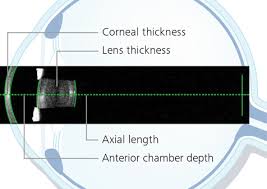


No comments:
Post a Comment